
Quick answer: To start a CBD gummy brand, pick your manufacturing model first: co-packed wholesale or white label for the fastest, lowest-cost launch, or private label if you need a formula nobody else sells. Then lock in your spectrum and potency, packaging, third-party testing and compliance review before you design a single label.
Most new CBD brands don't fail because of a bad logo. They fail because of inconsistent product, a missed launch window or a listing that gets pulled for a compliance problem. The good news is that every one of those risks can be managed before you spend money on inventory. Here's the step-by-step plan we walk new brand owners through.
Step 1: Choose Your Manufacturing Model
This one decision sets your budget, timeline and how different your product can be.
- Co-packed wholesale. A manufacturer produces proven gummies and packages them under your label. Lowest upfront cost and fastest to market. Best for testing demand. See wholesale and co-packing.
- White label. You choose from a manufacturer's library of ready-made formulas and add your branding. At Ajax, most white label projects ship in 3–4 weeks from order confirmation. See white label gummies.
- Private label. An R&D team builds a custom formula exclusive to you: blend, potency, flavor, shape and color. Expect roughly 4–6 weeks including sampling and iteration. See private label gummies.
Many brands start with white label or co-packed product to prove the market, then move to private label for their second line. Our white label vs. private label guide covers the trade-offs in detail.
Step 2: Define Your Product
Decide who you're selling to and build the product around them:
- Spectrum. CBD isolate and broad-spectrum (THC-free) are the simplest for customers who are drug tested or THC-sensitive. Full-spectrum includes trace THC and comes with more compliance considerations.
- Potency. Pick a clear milligrams-per-gummy number and keep it consistent across your line.
- Blends. Minor cannabinoids like CBN and CBG can differentiate your line. See formulating CBN and CBG gummies.
- Base. Pectin gummies are vegan and hold up better in summer shipping than gelatin. See pectin vs. gelatin.
Step 3: Pick a Manufacturer You Can Verify
Ask whether the gummies are infused or sprayed, whether the facility is FDA-registered and GMP-compliant, and whether every batch gets a third-party COA. Above all, confirm you're talking to the actual manufacturer and not a broker. Our guide on how to choose a CBD gummy manufacturer lists the questions to ask.
Step 4: Plan Packaging and Labels Early
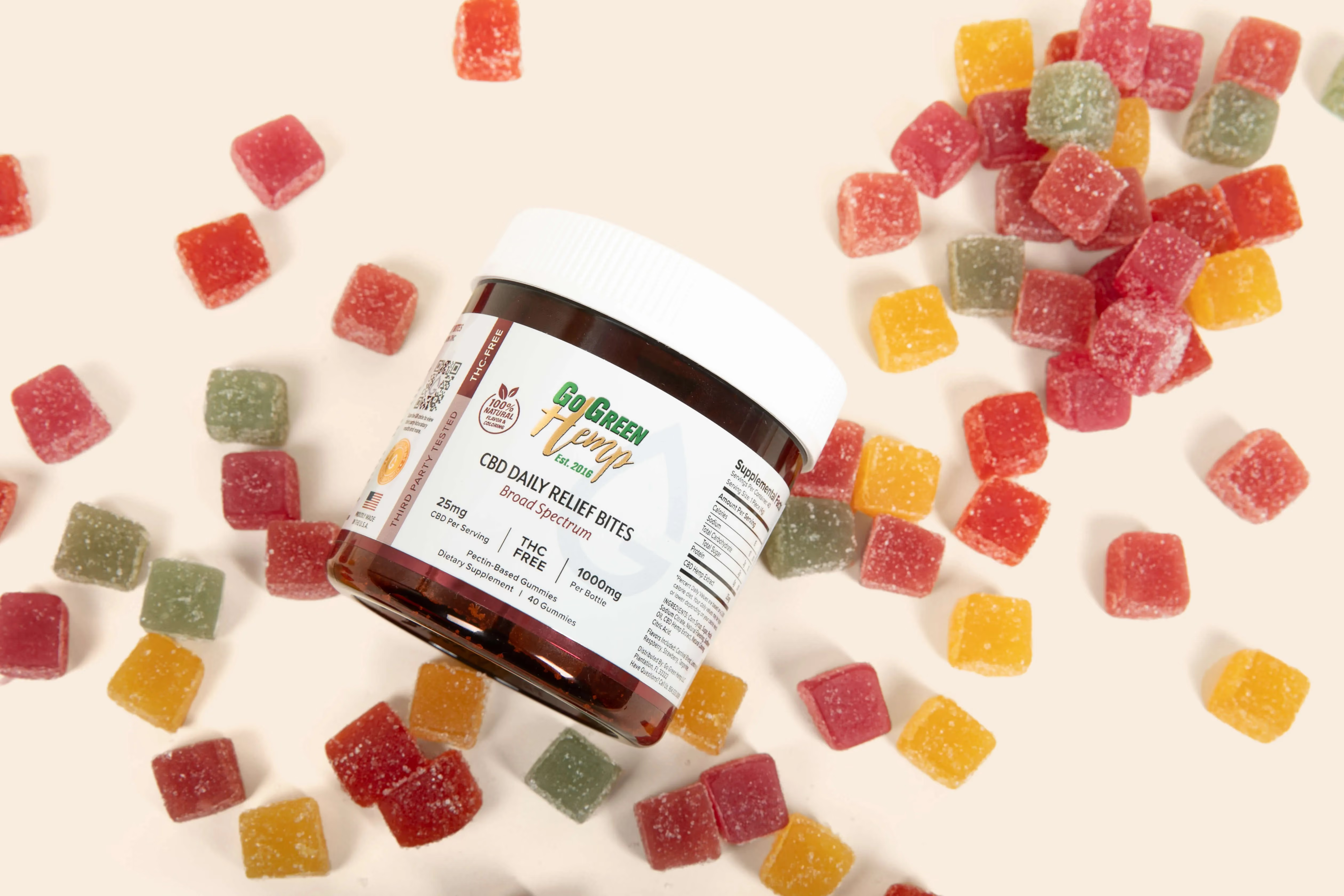
Packaging lead time is the most common reason launches slip. Decide on jars, bottles or pouches early, and confirm whether you need child-resistant packaging in your markets. Your label typically needs the product name, cannabinoid content per serving and per container, serving size, ingredients, net quantity, business contact information and a batch or lot number linked to the COA. Many brands also add a QR code that links to the batch COA. State requirements vary, so have your label reviewed before you print.
Step 5: Get Testing and Documentation in Place
Retailers, distributors, payment processors and marketplaces will ask for documentation. Make sure you receive a COA from an ISO-certified third-party lab for every batch, and keep batch records organized by lot number. A manufacturer that also tests active ingredients before production gives you an extra layer of protection.
Step 6: Review Compliance Before You Sell
Federal and state rules for hemp-derived cannabinoid products are changing, and they differ from state to state. Before launch, confirm that your formula, labels and marketing are allowed in every state you ship to, and review them with compliance counsel. Avoid claims that your gummies treat, cure or prevent any condition, on your packaging, website and social media.
Step 7: Budget Your Launch
Your first-order budget should cover product, packaging, label design and printing, testing, website and payment processing, and initial marketing. Product cost depends on potency, spectrum, packaging and quantity. For a breakdown of manufacturing costs, see How Much Does It Cost to Manufacture CBD Gummies?
Key Takeaways
- Choose your model first: co-packed wholesale, white label or private label.
- Build the product around your customer: spectrum, potency, blends and base.
- Verify your manufacturer: infused, FDA-registered, COA every batch, no broker.
- Order packaging early and get labels reviewed.
- Review compliance in every market before you sell.
Ajax Creations helps new brands launch with co-packed wholesale, white label and private label CBD gummies, all made in our FDA-registered facility in Plantation, Florida.
Frequently Asked Questions
How much does it cost to start a CBD gummy brand?
It depends on your model, order size, potency and packaging. Co-packed wholesale and white label have the lowest upfront costs because there is no formula development. Private label adds R&D and sampling. Get quotes on identical specs to compare fairly.
How long does it take to launch a CBD gummy brand?
Manufacturing is usually the fast part. At Ajax, white label projects typically ship 3–4 weeks from order confirmation and private label projects 4–6 weeks. Packaging lead times, label review and website setup often take longer.
Do I need a license to sell CBD gummies?
Requirements vary by state. Some states require registration or permits to sell hemp-derived products. Check the rules in every state where you'll sell, and consult compliance counsel.
Should I start with white label or private label?
Most first-time brands start with white label or co-packed product to prove demand, then move to private label once volume justifies a custom formula.
Related reading: CBD Gummies Wholesale: Pricing, MOQs & What to Ask | White Label vs. Private Label Gummies | How to Choose a CBD Gummy Manufacturer
About the Author
Romas Marcin is the Founder of Ajax Creations. With over 10 years of experience in cannabinoid manufacturing, formulation, and brand operations, Romas leads R&D and production at our FDA-registered facility in Plantation, Florida — where every gummy is infused, pectin-based, and third-party lab tested.